Wakefield Snapethorpe Primary School
Caring for All;Learning for Life


Our Reading Curriculum
Reading
Intent
Reading is the gateway skill which enables all children to access learning in all areas of the curriculum. Our intention at Snapethorpe Primary School is that all children leave our school being able to read confidently and fluently in order to access all areas of the curriculum, as reading is fundamental to many aspects of life. We aim for all children to leave our school with a love of reading for pleasure, as well as a deep understanding of reading for meaning.
Everything we do in our teaching of reading reflects our school motto — “Caring for All; Learning for Life” — and promotes our school learning powers: Aspiration, Independence, Engagement, Curiosity, and Resilience.
Implementation
Children will be supported on their journey by building on from a strong early reading foundation using the Little Wandle Letters and Sounds programme. In order to do so, all pupils move on to the Little Wandle Fluency programme, which is designed to develop their fluency and comprehensions skills. When children show sufficient fluency, they move on to our programme of daily whole class reading lessons. In Year 3, we bridge the gap from Little Wandle fluency into whole class guided reading sessions using oracy based teaching, building children up towards written comprehension. This is designed to enable children to develop key comprehension skills e.g. vocabulary development, retrieval of facts and inferring information as reading skills.
If a child requires further intervention over and above in order to help them keep up with the expectations of the curriculum, specific reading interventions such as Lexia and Little Wandle Fluency is used to accelerate their knowledge and understanding. Staff receive specific training in order to ensure that programmes are delivered with fidelity.
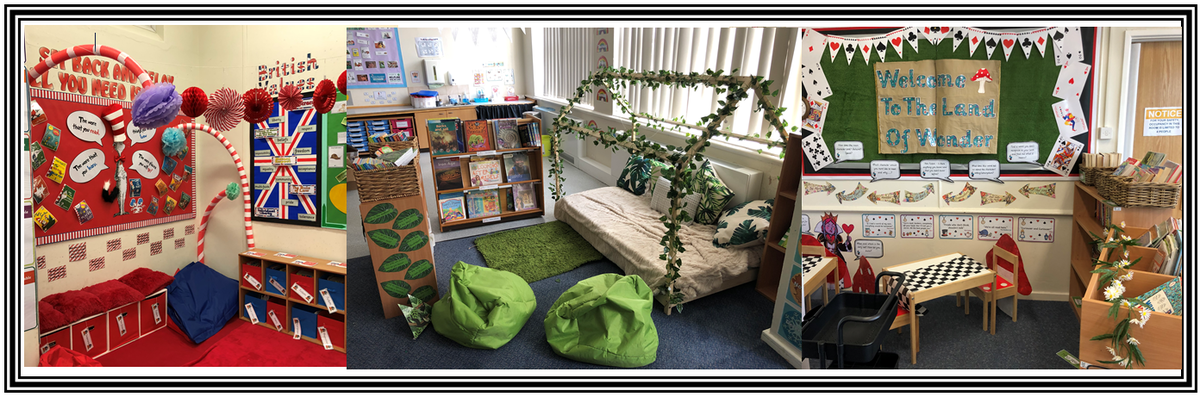
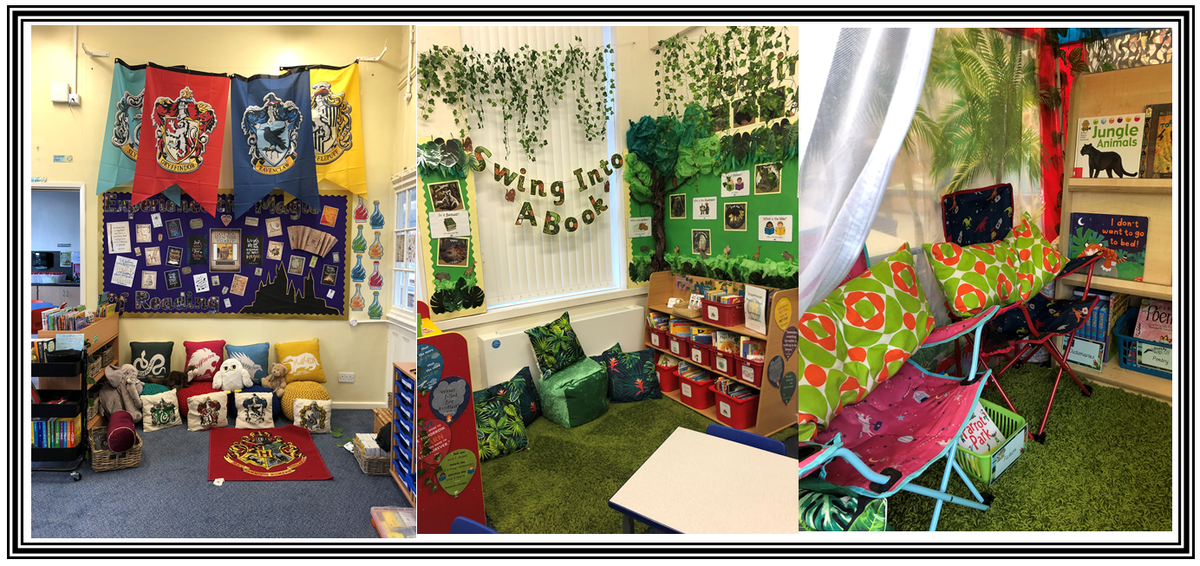
Snapethorpe Reading offer
Linking Reading & Writing
At Snapethorpe Primary School, we believe that reading and writing are interconnected skills. By immersing the children in a wide variety of high-quality and diverse fiction and non-fiction texts, they are exposed to a diet of rich vocabulary and purposeful sentence and organisational techniques. All of which, they are then able to apply in their own written work. In order to ensure that this takes place, we use a high-quality text driver as the basis for each unit of English work.
Progression in Reading Skills
Click here to see our Reading Progression across years 2-6.
Reading for Pleasure
We believe it is important for every child to read and for every child to be read to. Children have access to high quality and diverse texts to use when they read for pleasure. Class texts are chosen from our Reading Spine and are read during our timetabled ‘Class Novel’ session. During this time, fluency is modelled to pupils, discussions around the books takes place and children are given the opportunity to discuss books they have read and any recommendations they have.
Reading Ambassadors
Reading Ambassadors will be working towards promoting reading and reading for enjoyment across the school. They participate in a weekly book club, where they share their own book recommendations, read and discuss traditional and new texts, and research a variety of authors. This allows pupils to gain a wider knowledge around literature, which they can then share with their classes.
Reading Buddies
Across the school, we have a successful Reading Buddies programme to promote and support reading, particularly for our younger pupils. Our Reading Buddies volunteer their time and are carefully trained by our Reading Leader to work with children in Reception and Key Stage 1.
Each week, the Reading Buddies meet with their assigned partner to listen to them read, offering encouragement, guidance and positive reinforcement. This not only supports the development of early reading skills, but also helps to build confidence, fluency and a love of reading through positive peer interaction.
Family Reading Sessions
In Key Stage 1, we are committed to fostering a love of reading among our pupils and their families. We regularly invite parents and carers into school to take part in Family Phonics Sessions, where adults join their children in engaging phonics lessons. This helps families better understand how reading skills are taught and how they can support learning at home.
In addition, we host weekly Family Reading Sessions. During these sessions, parents and carers are welcomed into the classroom to share books with their children in a relaxed and enjoyable environment. This dedicated time encourages reading for pleasure and highlights the importance of developing regular reading habits both in school and at home.
Our Library
The school library is a wonderful resource to help children with their learning. Pupils have the opportunity to come and explore the wide range of books we have to offer. Each child can borrow a book from our library or their class book corner to take home to read for pleasure. We have a wide range of non-fiction books to link with class topics and fiction books to suit every type of reader.
Statutory Assessment
Children achieve strong foundations in Reception in line with national expectations of a Good Level of Development. In 2026, our GLD was above national results.
In Year 1, the majority of children pass the national Phonics Screen Assessment (PSC). In 2026, our PSC results were above national.
Children leave Key Stage 1 ready for the next step of their learning journey.
In Key Stage 2, our reading SATs results are growing in strength every year toward the national standard.
Beyond data, the impact is seen in pupils’ attitudes: they talk confidently about books, make thoughtful predictions and inferences, and show resilience when tackling new texts. Targeted interventions and inclusive practice ensure that gaps are identified early and narrowed quickly, enabling all pupils, including disadvantaged learners, to make strong progress from their starting points.
As a result, our pupils are well-prepared for the next stage of their education, equipped with the skills and confidence to access the wider curriculum through reading.
Statutory assessment
Helping Your Child Read at Home
Developing an early love for books and story is vital in helping children become enthusiastic and skilled readers. Children who read regularly both at home and at school, grow in confidence much more quickly and develop a love of reading that can last a lifetime. That is why, our Homework Policy states the expectation that all children are to read at home a minimum of 3 times per week.
If you would like any support or guidance to make home reading sessions a pleasurable experience and to maximise their impact, please speak with your child's class teacher.
Helpful Hints For Reading With Your Child